AI Video Generation for Automotive Marketing Videos

Content Strategy and Market Positioning
The proposed article must address a highly sophisticated target audience consisting of Chief Marketing Officers (CMOs) at Original Equipment Manufacturers (OEMs), dealership marketing directors, and creative leads within specialized automotive agencies. These professionals are navigating a complex economic climate characterized by flat ad budgets, an "EV slowdown" where only 34% of U.S. buyers plan to choose electric in the next two years, and historic lows in public trust. Their primary needs involve proving ROI in a zero-click search environment, streamlining content supply chains, and bridging the "uncanny valley" to maintain brand prestige.
The unique angle of this content differentiates itself from existing surface-level "AI tool lists" by focusing on the technical shift from "Dream Logic" to "Physical Logic" in 2025 video engines. It repositions generative video not as a cost-cutting shortcut, but as a "strategic platform for transformation" that enables hyper-personalization at scale. The analysis must answer how AI video can directly impact vehicle days-to-turn, why "Physical Logic" is the prerequisite for luxury brand trust, and how agentic AI will eventually automate the entire merchandising lifecycle.
The Generative Engine Landscape: Transitioning to Physical Logic
The foundational layer of automotive video marketing is the generative engine itself. The industry has moved beyond the "glitch era" into a generation of models that understand object permanence and the laws of physics. This section must detail the technical capabilities and comparative advantages of the primary video models available in 2025 and 2026.
Architectural Evolution and Physics Accuracy
Early generative models operated on "Dream Logic," where objects could spontaneously morph or deform to satisfy a text prompt. In the context of automotive marketing, this led to visual artifacts like wheels that turned into liquid or cars that changed shape when passing behind obstacles. Modern frontier models, specifically Sora 2 and Veo 3.1, utilize "Temporal Memory" and advanced physics engines to solve these problems. Sora 2, for example, maintains object identity throughout an entire clip, while Veo 3.1 acts like a ray-tracing engine, calculating exactly how light interacts with textures like metallic car paint and prismatic glass.
Feature | Google Veo 3.1 | OpenAI Sora 2 | Runway Gen-3 Alpha | Kling 2.6 |
Primary Strength | World-building & Physics | Long-form Consistency | Creative & Hybrid Control | Action & Motion Stability |
Audio Capability | Native/Synchronized | Experimental | Separate Workflow | Built-in/High-fidelity |
Automotive Fit | High-end Cinematic Ads | Storytelling & Physics | VFX & Retouching | Social Media & Motion |
Max Duration | 12+ Seconds | 60 Seconds | 10-11 Seconds | 10 Seconds (Extendable) |
Comparative Analysis of Leading Models
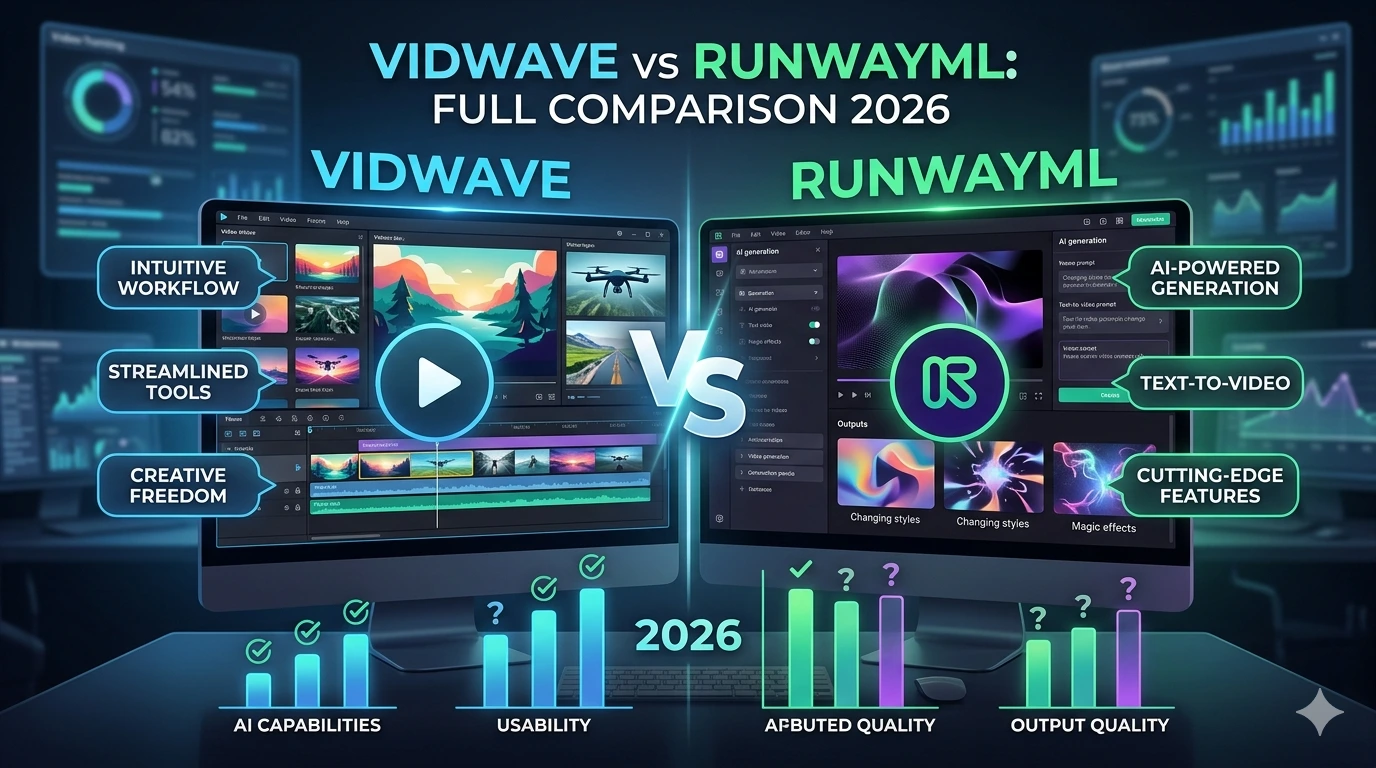
Google Veo 3.1 stands out as a "production-grade tool" within the Gemini ecosystem, capable of producing industry-leading cinematic realism with built-in audio and lip-sync. It is particularly valuable for "concept videos" where environmental continuity and lighting are paramount. OpenAI's Sora remains a standard-setter for physically accurate scenes, excelling in the reproduction of complex interactions such as water, fire, and particle simulations. For automotive editors, Runway Gen-3 Alpha offers "Motion Brush" and precise key-framing, making it ideal for filmmakers who want AI to amplify their existing editing workflows rather than just automate them. Kling 2.6, emerging from the Kuaishou research labs, has gained traction for its superior motion consistency in action sequences, ensuring that high-speed vehicle maneuvers remain physically plausible.
Economic Metrics: ROI and the Cost of Synthetic Production
The shift from manual to AI-driven video production represents a fundamental restructuring of marketing economics. While traditional video production for high-end automotive campaigns often requires six-figure budgets and months of preparation, AI tools can reduce these costs by 97-99.9%.
Production Cost Comparison and Scalability
Traditional automotive filming is a "long, risky, and expensive business" involving location scouting, car rigs, permits, and large crews. AI production minimizes these requirements, allowing a single creator to replace a team of specialists.
Expense Category | Traditional Production | AI-Powered Production |
Cost per Video (Small Scale) | $1,000 - $10,000 | $0.50 - $30 |
Production Timeline | 2 - 4 Weeks | 1 - 2 Days |
Team Size | Large (Script, Crew, Editors) | Minimal (Creative Oversight) |
Update/Revision Cost | 50% - 80% of initial budget | 5% - 10% of initial budget |
Scalability | Costs increase linearly with volume | Costs decrease with volume |
Research indicates that for a campaign involving 1,000 videos, manual production could cost between $1 million and $5 million, whereas AI can handle the same volume for $50,000 to $200,000. Furthermore, AI reduces production timelines by 80%, enabling brands to respond to market trends in real-time.
Return on Investment (ROI) and Lead Conversion
The ROI for video in the automotive sector is historically high, with 93% of marketers reporting a positive return. Viewers are 1.81 times more likely to purchase a vehicle after watching video content. At the dealership level, marketing automation and data-driven models have raised ROI by 20-40%, with some dealerships achieving profitability on their AI investments in as little as six months. Specific dealership implementations of AI video, such as those through the Phyron platform, have resulted in a 76% growth in Meta leads and a 22% reduction in cost per lead.
Dealer-Level Automation: Virtual Showrooms and 360-Degree Merchandising
At the retail level, the focus of AI video generation is on the "Digital Showroom." Consumers now average 14 hours of online research before visiting a dealership, and 64% would consider buying without a physical test drive if they could view 360-degree videos or immersive virtual tours.
Benchmarking Merchandising Platforms
Specialized platforms like Impel, Spyne, and Phyron are automating the transition from the dealership lot to the online listing. These tools utilize AI-guided apps to help staff capture photos and 360-degree walkarounds in under ten minutes.
Impel: Focuses on "Video Test Drives" and fully narrated walkarounds that are OEM-compliant and VIN-specific. Their "Capture App" allows any team member to produce professional-quality assets, claiming a process 33x faster than legacy imaging workflows.
Spyne: Offers an all-in-one platform for virtual car showrooms, utilizing AI to handle lighting corrections, background replacements, and plate blurring. Spyne has edited over 300,000 videos and claims to have powered over 100,000 conversions for its 2,000+ happy car dealerships.
Phyron: Positions itself as "content creation on autopilot," transforming existing photos and car data into AI-enhanced videos for marketplaces and social media. Adevinta car listings using Phyron video receive 50% more visits and sell vehicles 3-5 days faster.
Immersive Experiences and Personalization
By 2026, the car itself is transforming into a "digital moving platform," and marketing must reflect this connectivity. Virtual showrooms and augmented reality (AR) features allow users to visualize vehicles in their own driveways and explore interior finishes interactively. This hyper-personalization is critical, as tailored campaigns can deliver five to eight times higher ROI than generic outreach.
Brand Trust and the "Authenticity" Paradox: Case Studies
The use of AI in high-end automotive branding creates a tension between efficiency and the perceived "prestige" of the brand. Two major OEMs provide contrasting examples of how to navigate this challenge.
BMW: Reframing AI as a Cultural Mirror
BMW has adopted a dual approach to generative AI. In the "Make it Real" campaign for the iX2, BMW leveraged virtual influencer Lil Miquela to connect with younger, tech-savvy audiences. The campaign used AI face replacement to blend the digital character with real-world cinematography, telling an emotive story about the diversity of physical existence.
Conversely, the "Real, For Real" campaign used AI as a cultural lens to set up a contrast between synthetic absurdity and verifiable brand trust. By showcasing surreal AI-driven moments—such as dogs walked by drones or insect-infested weddings—BMW reframed authenticity as "the new disruption". The strategy focused on the "strange and unstable" nature of digital feeds, positioning a tested and inspected BMW as something grounded and trustworthy in an era of deepfakes.
Porsche and the Democratization of Production
The unofficial Porsche spec commercial "The Pisanos," created by filmmaker László Gaál using Google Veo 2, serves as a landmark case for AI production. Without a real car, location scouts, or a crew, Gaál produced a professional-grade ad in 16 days. The project went viral on Reddit, demonstrating that a single individual with iterative prompt engineering could replace an entire agency team. While not an official project, it generated substantial PR buzz for the "disruptive creative power" of AI in filmmaking.
Mercedes-Benz and Conversational AI
Mercedes-Benz has integrated AI more directly into the vehicle experience through its MBUX Virtual Assistant, powered by Google’s Gemini. In marketing, the brand utilized RTB House’s ContextAI to target users browsing for premium travel or jewelry with sleek, high-performance video ads. This focus on quality and brand safety resulted in a video completion rate of 78%, reaching over 3 million unique users with ad placements that elevated the iconic brand's reputation.
Technical Challenges: Rendering, Physics, and the Uncanny Valley
The primary barrier to universal adoption of generative video in automotive marketing is the "uncanny valley"—the disquieting feeling consumers experience when a digital representation is nearly, but not perfectly, realistic.
Physics and Object Permanence in Video Models
Automotive rendering requires extreme precision in representing lighting, reflections, and motion trajectories. A basketball player missing a shot might see the ball spontaneously teleport to the hoop in older models; in the newest models, the ball rebounds off the backboard according to the laws of physics. This transition from "spaghetti consistency" to "true object permanence" is vital for depicting vehicles in motion.
Temporal Memory: Sora 2 remembers what a car looks like even after it drives behind a tree, ensuring it does not emerge with a different color or shape.
Ray-Tracing Engines: Veo 3.1 calculates how light interacts with textures, ensuring that shadows on a vehicle's body move in perfect sync with the environment.
VBench Metrics: Evaluation of these models now uses a 16-dimension benchmark suite, including motion smoothness, temporal flickering, and spatial relationship.
Forensics and Deepfake Detection
As generative content becomes more realistic, the risk of misinformation increases. In 2024, deepfake incidents increased by 3,000%, and synthetic voice attacks on insurers rose by 475%. Forensic analysis is becoming a necessary skill for automotive marketers to protect brand integrity. Techniques include:
Metadata Analysis: Reviewing timestamps and device origin to detect tampering.
Waveform and Pixel-level Analysis: Identifying synthetic "fingerprints" in audio and video.
Linguistic Baselines: Using AI to establish a "structural baseline" from genuine material to flag deviations in style or tone.
Search Evolution: Navigating AIO and Zero-Click SEO
The search landscape is undergoing its "biggest shift in years," with Google AI Overviews (AIO) and voice search reshaping how buyers discover vehicles.
The Rise of Generative Engine Optimization (GEO)
AI Overviews now appear for approximately 16% of queries, and their presence is increasingly commercial rather than just informational. Crucially, 89% of citations in AI Overviews come from pages that are not in the traditional Top 10 rankings, meaning the rules for visibility have been entirely rewritten.
Query Type | Change in AIO Trigger Frequency (2025) |
Commercial Queries | Up from 8.15% to 18.57% |
Transactional Queries | Up from 1.98% to 13.94% |
Navigational Queries | Up from 0.84% to 10.33% |
To adapt, dealerships must optimize for "Zero-Click SEO" by providing structured content (unordered lists) that AI models can easily scan and summarize.
Voice Search and Local SEO
By 2025, over 50% of online searches are expected to be voice-based. Among drivers, 41% use voice search to find directions to dealerships, and 44% use it to check prices. This has led to a 200% surge in "car dealerships near me" queries. Marketers must optimize for long-tail, conversational keywords and ensure their Google Business Profiles are enriched with AI-generated, geo-specific content.
Guidance for Production: Research Priorities and Expert Perspectives
This section provides specific research instructions for the further development of the article by Gemini Deep Research, focusing on areas where current data is evolving rapidly.
Specific Studies and Sources to Reference
IAB Digital Video Ad Spend & Strategy Report (July 2025): This report details that 30% of digital video ads in 2024 used GenAI, a figure expected to reach 39% by 2026.
HubSpot State of Marketing 2025: Provides the baseline for ROI across channels, noting that short-form video (TikTok, Reels) delivers the highest return for 21% of marketers.
StartUs Insights Discovery Platform: Tracks 9 million companies and provides the yearly patent activity growth rate of 3.02% in the automotive sector.
NADA 2023 Data: Confirms that 72.2% of dealer advertising now flows to digital channels, representing a permanent shift in consumer research behavior.
Valuable Areas for Investigation
Deep research should prioritize the "Agentic AI" shift. Gartner data indicates that while 75% of enterprises are experimenting with AI agents, only 15% have deployed fully autonomous, goal-driven systems. Investigation into how these agents will eventually handle the "agent-to-agent commerce" lifecycle—where a consumer’s AI assistant negotiates with a dealership’s AI assistant—is a critical "frontier" topic.
Expert Viewpoints to Incorporate
The article should incorporate perspectives on the "Democratization vs. Craft" debate. While AI lowers the barrier to entry, experts like Taylor Nixon-Smith warn that it is a "Pandora’s box" that could lead to mass production and the devaluation of artistry. Reconciling this with the views of studio executives who expect 80-90% efficiency gains in visual effects (VFX) will provide a balanced narrative.
Controversial Points Requiring Balanced Coverage
The Job Displacement Debate: While AI boosts productivity, many in the industry remain uneasy about the declining number of entertainment and production jobs. The report should balance "efficiency gains" with "ethical guardrails".
Transparency and Disclosure: Over half of creatives (58%) use AI in client work without disclosure. The controversy over whether this constitutes a breach of ethics or is simply a "new normal" as AI becomes as standard as Photoshop must be addressed.
Intellectual Property (IP) and Training Data: Major studios have challenged foundational models for using their IP without permission, a legal hurdle that could impact the commercial safety of these tools for OEMs.
SEO Optimization Framework
To ensure maximum discoverability, the article should adhere to the following keyword and structural strategy, derived from high-volume, low-competition trends in the automotive marketing sector.
Primary and Secondary Keywords
Primary Keywords | Secondary Keywords | Long-Tail/Conversational Queries |
AI video generation automotive | Virtual car showroom AI | "How to create AI car commercials?" |
Automotive marketing AI video | 360-degree car video walkaround | "Best AI video tools for car dealerships 2026" |
Synthetic car commercial production | Google Veo 3.1 automotive use | "ROI of video marketing in automotive industry" |
Virtual test drive AI software | Spyne vs Phyron for dealerships | "How does AI impact automotive SEO?" |
Featured Snippet Opportunity
Format: Markdown Table Question: "What are the benefits of AI-generated video for car dealerships?" Answer Table:
Speed: Under 10 minutes from lot to online.
Cost: 97-99% reduction compared to traditional production.
Efficiency: Cars sell 3-5 days faster with video.
Leads: 76% increase in lead generation on social media.
Conversion: 64% of buyers would buy without a physical test drive.
Internal Linking Strategy
Contextual Linking: Link "Virtual Showrooms" to deeper dives on AR/VR in automotive commerce.
Industry Trends: Link "Agentic AI" to broader reports on 2026 automotive technology trends and supply chain connectivity.
Technical Deep-Dives: Link "Physics Accuracy" to benchmarks like VBench and technical evaluations of diffusion models.
Synthesis of Market Insights and Future Outlook
The convergence of generative video and automotive marketing is not merely a change in medium, but a fundamental shift in how value is communicated and trust is established. The transition toward a software-defined vehicle platform is mirrored by the transition toward software-defined marketing. As of 2026, success will not belong to the first to adopt AI, but to those who maintain human integrity and creativity while leveraging these tools for "operational intelligence".
The "Experiential Renaissance" in car buying—leveraging a fusion of digital tools and physical events—is the new baseline for engaging Millennials and Gen Z buyers. For these generations, a TikTok or Instagram Reel is not a "side channel" but the central space where lead generation occurs. AI-powered video tools that transform blog posts into engaging videos or static inventory into full-motion sales pitches are the prerequisites for survival in this high-speed, zero-click environment.
Ultimately, the goal of AI in automotive marketing is the "democratization of storytelling". By reducing the cost of high-end production by 90% or more, AI allows smaller brands and local dealerships to compete with the cinematic polish of global OEMs. As the technology moves into the era of agentic, autonomous systems, the human role will shift from manual creation to strategic direction and ethical oversight, ensuring that the "joy of driving" is reflected in a medium that is both technologically advanced and unmistakably human.